Lessons from Wedding Invitation Design

Top 10 Wedding Invitation Design Tips for Brides: Fonts, Color Palettes, and Layouts
Estimated reading time: 7 minutes
- Start with a clear theme and color palette
- Choose fonts deliberately — readability first
- Design for contrast and legibility
- Proof, proof, proof — then proof again
- Order smart and plan your timeline
- Why the invitation matters
- Top 10 design tips (detailed)
- How these tips relate to wedding services and expertise
- Practical takeaways for women planning a wedding
- Wording and etiquette — simple templates
- Designing a wedding logo/monogram
- Digital elements and accessibility
- Budgeting and sustainability tips
- Real-world checklist (quick)
- Next steps — make your invitations unforgettable
- Final thoughts
Why the invitation matters
Your invitation performs three jobs: it informs, it organizes, and it brands your wedding. It tells guests the who/what/when/where, signals dress code and tone, and creates a cohesive aesthetic that carries through save-the-dates, menus, signage, and thank-you cards. When invitations are thoughtfully designed — with the right fonts, colors, and layout — they reduce guest questions, boost RSVP rates, and create excitement.
Top 10 design tips (detailed)
1. Start with a clear theme and color palette
- Pick the wedding theme first (rustic wedding, boho wedding, vintage wedding, destination wedding). The invitation’s textures, imagery, and typography should support that theme.
- Choose a dominant color plus one or two accent colors. For example: dusty blue + gold + cream for a vintage wedding; terracotta + sage + ivory for a boho wedding.
- Use a free online palette tool to generate combinations and test them against sample text to ensure legibility.

2. Choose fonts deliberately — readability first
- Pair a serif or sans-serif for body text with a script or display font for names or headings.
- Keep body text at 10–12pt for print and 14–16px for digital invites to ensure readability for all guests.
- Avoid overly ornate scripts for important details (date, time, location). Script works best for emphasis, not essential information.
- Browse curated wedding fonts to find distinctive, high-quality options — sites like fonts.wedding make it easy to preview and download fonts that match your theme.
3. Establish typographic hierarchy
- Use hierarchy to guide the eye: couple’s names (largest), event (medium), date/time/location (standard), RSVP details (smaller).
- Maintain consistent spacing. Use line-height of 1.2–1.5 for clarity.
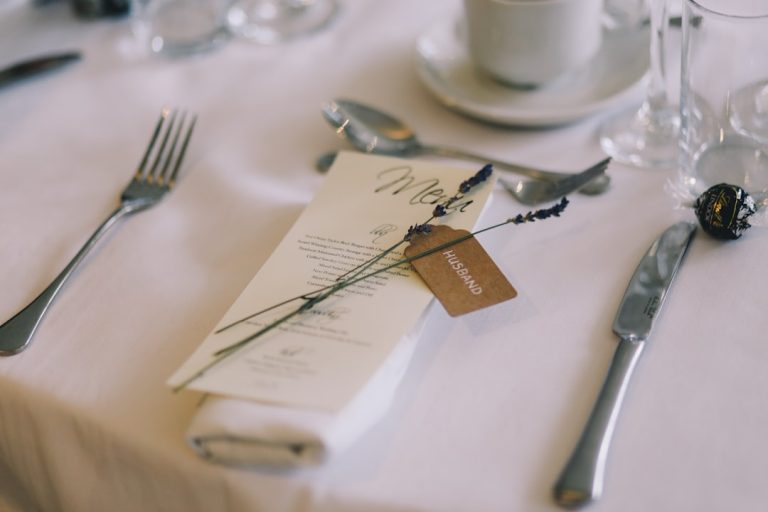
- Apply the same hierarchy to menus, programs, and signage for a cohesive look.
4. Design for contrast and legibility
- Dark text on a light background is safest.
- Test legibility in different lighting — wedding rehearsals, evening events, or dim locations.
- Run a test print for metallic or foil finishes, as some can reduce contrast and make small text hard to read.
5. Use white space intentionally
- Avoid overcrowding; let elements breathe. White space enhances perceived value and readability.
- Group related information (e.g., ceremony details vs reception details) and separate with subtle dividers or spacing.
6. Think beyond the card — enclosure cards and digital options
- Include enclosure cards for directions, accommodations, and RSVP details.
- Consider a digital RSVP or a wedding website link for real-time tracking; include a shortened URL or QR code.
- For eco-conscious couples, offer a digital-only invitation option or use recycled papers.

7. Match print methods to your design
- Techniques: digital printing (cost-effective), letterpress (luxury tactile feel), foil stamping (glamour), embossing/debossing (texture).
- Factor turnaround time: specialty print techniques can add weeks, so schedule printing well in advance.
8. Size, envelopes, and addressing
- Standard invitation size is 5”x7”, but square or custom sizes can feel unique.
- Use inner and outer envelopes for formal events: inner for the invitation, outer for mailing.
- Hire a calligrapher or use high-quality printing for names and addresses.
9. Proof, proof, proof — then proof again
- Proofread every word (spelling, addresses, titles). Have at least two people review the final layout.
- Order a single physical proof before approving a full run.
- Confirm spellings of names and titles for formal invitations.
10. Order smart and plan your timeline
- Order 10–15% extra to cover last-minute additions.
- Timeline: send save-the-dates 6–8 months before for destination weddings, 4–6 months for local.
- Coordinate invitations with vendor timelines (dress fittings, registry announcements, seating chart deadlines).
How these tips relate to wedding services and expertise
As an AI consulting and wedding design partner, we combine creative design with logistical know-how. Our team can:
- Create bespoke wedding stationery systems that include invites, save-the-dates, RSVP cards, menus, signage, and a signature wedding logo or monogram.
- Advise on print techniques, ink choices, and paper stock to match your wedding theme while staying on budget.
- Manage timelines, proofing, and vendor communication so you don’t have to worry about mailing dates or rush charges.
- Integrate digital tools (wedding websites, QR codes, digital RSVPs) to streamline guest management.
Practical takeaways for women planning a wedding
- Spend one focused hour building a mood board of colors, fabrics, and venues.
- If you love a script, use it for names only; keep essential info in a clear serif or sans-serif.
- Book specialty print services at least 6–8 weeks before your planned mailing date.
- Plan for 10–15% overage and one physical proof to avoid surprises.
- Download curated wedding fonts and design templates from fonts.wedding to experiment before committing to a designer.
Wording and etiquette — simple templates
Formal:
Mr. and Mrs. Jonathan Smith
request the honor of your presence
at the marriage of their daughter
Elizabeth Anne
to
Michael Thomas Johnson
Saturday, the fifth of October
Two thousand twenty-six
at four o’clock in the afternoon
St. Mary’s Cathedral
Semi-formal:
Elizabeth Smith & Michael Johnson
invite you to celebrate their marriage
Saturday, October 5, 2026
Four o’clock in the afternoon
The Willow Barn
Reception to follow
Casual:
Join us as we tie the knot!
Elizabeth & Michael
Oct 5, 2026 • 4pm
Willow Beach Club
Cocktails and dancing after
Designing a wedding logo/monogram
A wedding logo or monogram is a powerful asset: use it on invitations, welcome signs, napkins, and even favors. Keep it simple:
- Use initials in a circular or rectangular badge.
- Pair the monogram with a secondary typeface for full names and details.
- Choose one or two color variants (one for print, one for digital).
Digital elements and accessibility
- Ensure digital invitations and wedding websites are mobile-friendly.
- For accessibility, use high-contrast text and alt text for images.
- Offer multiple RSVP methods (mail, website, phone) for guests who prefer different channels.
Budgeting and sustainability tips
Consider a hybrid approach: printed invite + digital RSVP reduces printing and postage costs. Use recycled or plantable seed paper for save-the-dates if sustainability is a priority.
Real-world checklist (quick)
- 9–12 months: choose theme and venue; draft guest list.
- 6–8 months: send save-the-dates (destination 8–12 months).
- 4–6 months: lock in invitation suite design.
- 8–6 weeks: print and mail invitations.
- 3–4 weeks before: RSVP deadline.
- 1–2 weeks: finalize seating chart and vendor headcounts.

Next steps — make your invitations unforgettable
If you’re ready to move from inspiration to execution, we can help you design a cohesive stationery system that reflects your wedding theme. Explore curated, high-quality wedding fonts and ready-to-customize design assets at fonts.wedding to begin experimenting today.
Final thoughts
Invitations are the opening chapter of your wedding story. With intentional font choices, a cohesive color palette, thoughtful layout, and a realistic timeline, your stationery can do more than convey information — it can create excitement, set expectations, and mirror the love and style you’re celebrating.
FAQ
What size should our wedding invitations be?
Standard invitation size is 5”x7”, but square or custom sizes can feel unique.
How far in advance should we send our invitations?
Mail formal invitations 6–8 weeks before the wedding, RSVP deadline 3–4 weeks before.
Can we use digital invitations?
Yes, consider offering a digital-only invitation option or a wedding website link for RSVP tracking.
What fonts should we choose for our invitations?
Pair a serif or sans-serif font for body text with a script or display font for names or headings.
How many invitations should we order?
Order 10–15% extra to cover last-minute additions or damaged mailings.